
Cashout limits hidden in bonus terms
| Example | Cashout cap | Effect | What to check |
|---|---|---|---|
| NZ$20 bonus; cap NZ$100 | NZ$100 | NZ$80 above bonus amount is forfeited | Check whether cap applies to bonus winnings or total balance |
| NZ$20 bonus; cap NZ$200 | NZ$200 | NZ$180 above bonus amount is forfeited | Read conversion and withdrawal clauses |
| NZ$20 bonus; cap NZ$500 | NZ$500 | NZ$480 above bonus amount is forfeited | Confirm cap currency and per-account limits |
| No stated cap | Not specified | Cannot infer unlimited withdrawal from silence | Ask operator and retain written terms |
Examples explain how these conditions work. Check the current rules and terms that apply to you.
Bonus restrictions decide whether you qualify for a casino promotion, which games you can play, how much you may stake and when winnings become withdrawable. A NZ$200 welcome offer can be less useful than a NZ$50 one if the larger bonus comes with difficult wagering rules or a low cashout cap. Ask two things before claiming it: what must I do to withdraw, and what could void the bonus?
| Restriction | What to find in the terms | Why it matters |
|---|---|---|
| Eligibility | Age, country, new-player status, qualifying deposit and payment method | You might be unable to claim the offer at all. |
| Wagering requirement | Multiplier, calculation base and eligible turnover | The advertised bonus may require substantial betting before payout. |
| Game restrictions | Eligible games, excluded titles and contribution percentages | Some bets do not move wagering progress; others may breach the offer. |
| Maximum bet | Stake per spin, round, hand or game feature | An oversized stake may invalidate a promotional balance or winnings. |
| Cashout conditions | Maximum cashout, withdrawable funds and early-withdrawal consequences | Your displayed balance may exceed the amount you can actually receive. |
| Time limits | Claim, activation, free-spin and completion deadlines | Different clocks can begin at different times. |
| Verification and conduct | KYC documents, duplicate-account rules and prohibited play | A withdrawal request can trigger checks or a dispute. |
In New Zealand, start with the operator’s legal status. Bonus terms from an offshore casino may not comply with rules that apply to a licensed NZ operator. Licensed casinos must take reasonable steps to keep under-18s from gambling. Check which regime covers the promotion before comparing its advertised value.
Check these seven conditions before accepting a bonus
Read the promotion-specific terms alongside the casino's general bonus terms and conditions . If they disagree about withdrawals or game eligibility, ask support which clause controls. Keep the support response.
New Zealand bonus rules: why the operator's status matters

As at October 2026, the Online Casino Gambling Act 2026 is in force, but licensing is being introduced in stages. According to the Department of Internal Affairs (DIA) , casinos that served New Zealand customers before 1 May 2026 can continue under transitional provisions. From 1 December 2026, transitional access narrows; the first licences are expected in early 2027. Being accessible from New Zealand does not make a casino NZ-licensed.
Online Casino Gambling Regulations 2026, regulation 13 sets the following conditions for inducements offered by operators covered by the licensed regime:
- Bonus-like inducements must have clearly specified terms, and players must be told whether they are using promotional funds or uncommitted funds.
- Operators must allow a customer to withdraw winnings resulting from an inducement without requiring those winnings to be gambled again .
- The permitted value of an inducement is limited to NZ$100; where spending the customer's own funds is required, it is also limited to 200% of the original deposit or bet, whichever is lower.
- Customers must be allowed at least 60 days to fulfil the conditions for a payout from an inducement.
Not every offshore casino available during the transition must follow the future licensed-operator conditions. A foreign offer requiring 30× wagering on bonus winnings or seven-day expiry is not a model for NZ-licensed terms. The DIA explains when offshore operators must leave the market.
How wagering requirements change the real cost of a bonus
A wagering requirement (or playthrough requirement) measures how much qualifying betting turnover a promotion demands. The 20× or 30× figure is the wagering multiplier . What matters just as much is the wagering base : bonus credit alone, or the deposit plus bonus.
Consider a traditional offshore or legacy deposit match: deposit NZ$100 and receive NZ$100 in bonus credit.
| Wagering formula | Calculation | Qualifying turnover |
|---|---|---|
| 30× bonus only | 30 × NZ$100 | NZ$3,000 |
| 30× deposit plus bonus | 30 × (NZ$100 + NZ$100) | NZ$6,000 |
The first formula uses bonus-only wagering; the second counts the deposit plus bonus. NZ$3,000 of turnover is not a forecast loss or guaranteed payout. Every qualifying stake carries the game’s house edge, while return to player (RTP) describes a long-run average, not what will happen in a short session.
Game contribution can multiply the work
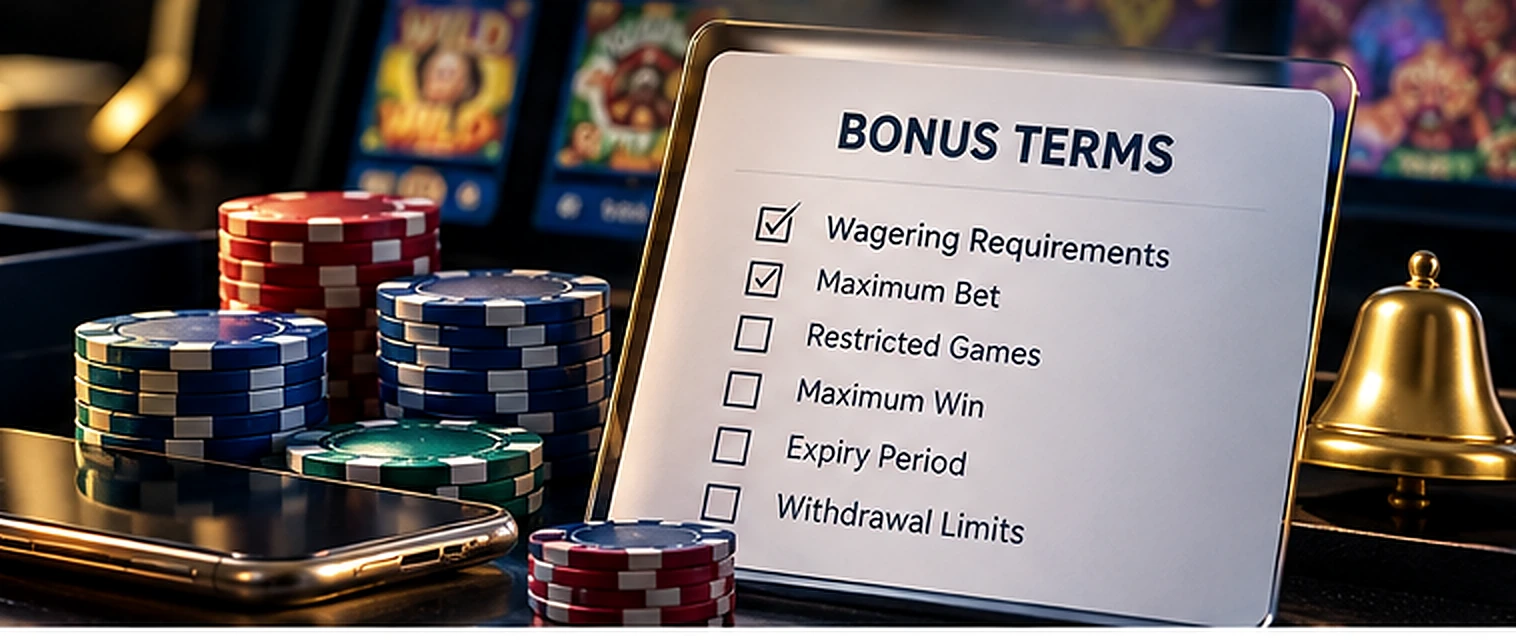
Game contribution determines how much of each stake counts. On a 100%-contribution slot, a NZ$10 stake adds NZ$10 to the wagering meter. At 20% contribution, it adds NZ$2. Clearing NZ$3,000 at that rate requires NZ$15,000 in actual stakes, assuming every bet qualifies and the game is permitted.
Blackjack, roulette and baccarat may contribute less than slots, or nothing. Live casino, video poker and selected high-RTP slots may have separate rates. Zero contribution is not the same as prohibition: one game may simply leave the meter unchanged, while playing another could breach the bonus terms.
Game and betting restrictions that create avoidable breaches
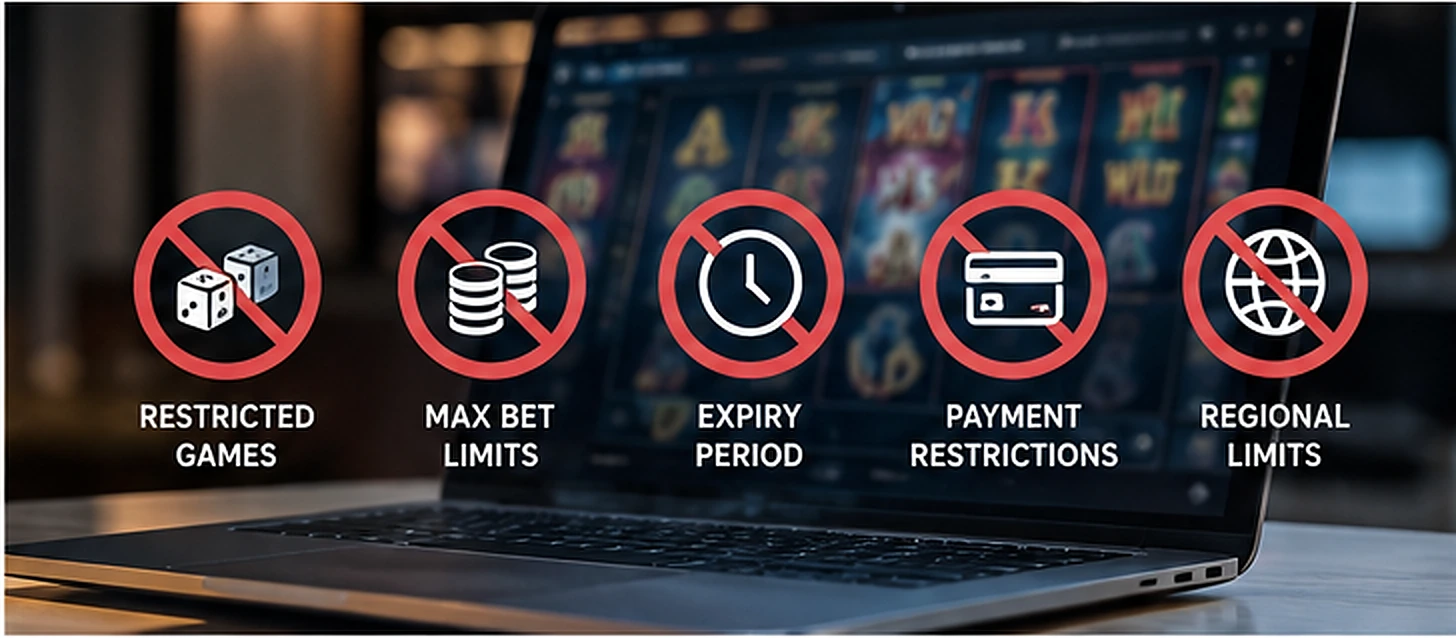
An eligible-games list may name particular slots, studios or suppliers rather than the entire lobby. Progressive jackpot slots, crash games and specialty games may be excluded. Some offers also restrict bonus buys, side bets, double-up features or autoplay, even within an otherwise eligible game.
A maximum bet can apply separately from game eligibility. A traditional offer might cap stakes at NZ$5 per spin; NZ$6 could breach the condition even while the wagering meter advances. The cap may instead cover the total roulette round, several hands or a feature purchase. Multiple smaller bets may count as one stake if the clause says so.
Before playing, check the named game, its contribution percentage and the complete stake displayed in the interface. Keep screenshots of the terms and the wagering meter in case a bet or cashout is disputed.
Why a casino balance may not equal the cashout amount
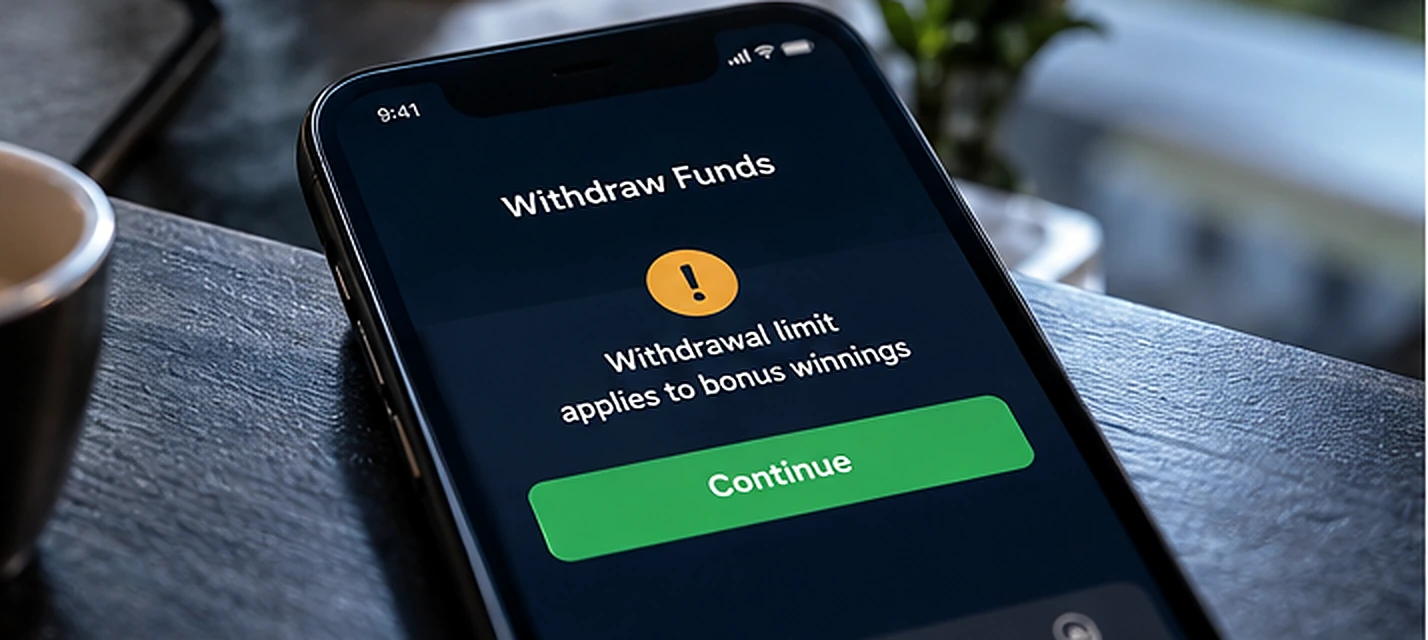
Casinos may maintain separate deposit, bonus and real-money balances , shown as two wallets or a single total. The accounting order matters: a stake may use cash first, promotional funds first or both. The headline balance alone may not show what you can withdraw.
A sticky bonus is usually non-withdrawable credit. A non-sticky bonus may let you forfeit promotional funds and withdraw eligible cash, but the label is not enough to determine your rights. Check whether the original deposit is locked; that is a separate condition.
Different limits control different stages of a bonus:
- Maximum bonus amount: the most promotional credit an offer can award, even when the deposit match percentage is higher.
- Maximum win: an upper bound on winnings from a qualifying game, spin or promotion, if the terms impose one.
- Maximum cashout: a cap on promotional winnings that can be converted or paid out under the offer, where permitted.
- Withdrawal limit: an account-level or payment-processing limit, such as an amount per transaction, day or month.
Suppose an overseas no-deposit offer displays NZ$420 in winnings but expressly caps promotional cashout at NZ$100. Meeting the wagering target would not make the remaining NZ$320 payable under those assumed terms. Whether the cap is enforceable depends on the applicable law; this is not an example of NZ-licensed conditions.
In some foreign offers, requesting a withdrawal before completing wagering cancels the bonus. It does not follow that the casino may seize unrelated real-money winnings. Identify which funds remain uncommitted, which promotional credits would expire, and what the law permits before requesting a withdrawal.
Expiry dates: three clocks that may not match

A bonus may have several deadlines: a claim window for entering the code, a period to opt in and a separate clock for finishing wagering. Free spins may expire earlier, while their winnings move to another wallet. Look for the trigger: registration, deposit, opt-in, first spin or the date the bonus was awarded.
“Valid for seven days” is incomplete without a start point. Does the clock begin at registration or when the bonus reaches your account? Does the deadline pause during KYC? Under the NZ licensed-casino rules, customers must receive at least 60 days to fulfil terms for a payout from an inducement. A foreign seven-day example does not set the NZ standard.
Eligibility, deposits and payment methods
The type of bonus changes the eligibility test. Welcome and first-deposit offers often target new customers; reload bonuses, cashback, loyalty rewards and VIP promotions may target existing ones. A no deposit bonus can still require registration, email verification or a promo code. Some offers require an explicit opt-in even when they appear in the account.
Geographical restrictions may depend on residence, current location or both. Operators may use geolocation, IP addresses and device data in fraud checks, although none alone proves lawful residence. A VPN used to bypass the restriction does not make an ineligible player eligible.
“One bonus per account”, “per person” and “per household” are different rules. Duplicate accounts or shared payment details can trigger reviews; sharing an address does not itself prove bonus abuse. Ask the operator to cite its clause if an offer is rejected.
Some international promotions exclude e-wallet deposits through Skrill, Neteller or PayPal even where those methods work for ordinary transactions. Separately, regulation 18 restricts credit-contract payment methods, including credit cards, and specified gambling-linked methods for operators it covers. An accepted payment method is not necessarily a bonus-eligible payment method .
Different bonuses hide different restrictions
Free spins can be tied to a particular slot, fixed stake and expiry, with different rules for the resulting winnings. For a deposit match bonus , compare the minimum deposit, match percentage, maximum bonus and wagering base. A no-wagering bonus can still restrict games, cashout or eligibility.
Cashback might reimburse a percentage of net losses rather than stakes; it can be capped or credited as bonus funds. VIP tiers and loyalty rewards may have their own qualification rules. A sports bonus is not interchangeable with casino credit, particularly where New Zealand restricts links between casino loyalty benefits and sports betting.
Bonus abuse, account checks and disputed winnings
Casinos may prohibit bonus abuse such as multiple-account claims, coordinated play or hedge betting. One operator might classify repeated bets on opposing roulette outcomes as “low-risk betting”. The prohibited pattern should be identifiable in the terms; an accusation alone is not proof of a breach.
A fraud-system flag may lead to manual review, not an automatic finding. Know Your Customer (KYC) checks can involve identity, address, age and payment verification. They may delay withdrawals or prompt account restrictions or account suspension . Bonus forfeiture , winnings confiscation and loss of deposited funds are three separate outcomes, each requiring its own basis.
For a disputed payment, request the precise clause, the accepted terms' date, transaction IDs and the operator's calculation. Keep screenshots of the promotion, balances, wagering meter, emails and support chat. Do not add another deposit merely because someone claims it is needed to “unlock” a withdrawal.
A quick test: can the offer actually meet your needs?
Take an illustrative offshore offer: NZ$100 bonus, 30× bonus-only wagering, NZ$5 maximum stake, seven days to complete and a restricted-game list. Test it in this order:
- Check the jurisdiction. Does the operator's legal status make that wagering and deadline structure applicable to you in New Zealand?
- Calculate the target. NZ$100 × 30 equals NZ$3,000 of qualifying turnover; a reduced-contribution game increases the actual stakes required.
- Check the permitted route. Is your preferred game allowed, does it contribute fully and can you keep each complete stake within NZ$5?
- Check the exit. Does the promotion have a maximum cashout, separate wallet rules, a withdrawal cancellation provision or additional identity checks?
- Make the decision without chasing the target. If the terms are unclear or you would need to extend play beyond your planned budget or time, decline the offer.
Common questions about bonus restrictions
Can I withdraw my deposit while a casino bonus is active?
It depends on the terms governing your deposit. Some traditional offers cancel an unfinished bonus after an early withdrawal. Under NZ rules, do not assume a foreign sticky-bonus clause allows the operator to retain uncommitted cash.
Do bets on excluded games count towards wagering?
Not necessarily. A 0%-contribution game can leave wagering unchanged; a prohibited game can cause a breach. Check both the contribution table and the named-game restriction.
What if a free-spin win is larger than the maximum cashout?
The payout can be capped even if the bonus wallet shows a larger figure. The actual result depends on whether the restriction applies to free-spin winnings, all promotional winnings or other funds, and whether the operator can lawfully enforce it.
Does completing wagering guarantee a withdrawal?
No. The casino may still need to complete identity or payment checks. But it cannot add a new wagering condition without a legal and contractual basis. Regulation 13 protects withdrawal of winnings from an inducement without requiring those winnings to be gambled again under the licensed regime.
Can the casino change bonus terms after I opt in?
Save the original promotion and its amendment clause when opting in. If a later change affects an existing balance, deadline or winnings, ask the operator to identify the contractual basis and the version of the terms it relied on.
Where can New Zealand players complain about bonus winnings?
Complain to the operator first and request a written response. Under the new regime, complaints about licensed operators can also go to the DIA. Transitional and offshore accounts may fall under different processes; consult DIA's current player guidance before relying on an overseas regulator.
When a bonus deadline conflicts with gambling limits
Deposit limits, time limits, time-outs and self-exclusion must not be bypassed to meet a bonus deadline. Cashback and VIP rewards are not reasons to extend play beyond your budget. For confidential help in New Zealand, contact the Gambling Helpline on via gamblinghelpline.co.nz or text 8006 .