
NZ slot bonus terms
These published first-deposit offers include free spins. A bonus does not change a slot’s RTP; check the exact game version and current terms.
 SpinBet
100% up to NZ$2,000 + 100 free spins
First deposit only; maximum bonus bet NZ$25.
Offer terms checked 19 October 2026. Confirm the current conditions with the operator.
Minimum depositNZ$30 N1 Casino
100% up to NZ$1,500 + 150 free spins
25 spins daily for 6 days; activation and expiry limits apply.
Offer terms checked 19 October 2026. Confirm the current conditions with the operator.
Minimum depositNZ$30 Wildz
100% up to NZ$500 + 200 free spins
25 spins daily for 8 days, valued at NZ$0.10 each.
Offer terms checked 19 October 2026. Confirm the current conditions with the operator.
Minimum depositNZ$10 Spinz
100% up to NZ$500 + 200 bonus spins
Balance Booster terms apply 35× wagering to the deposit plus bonus.
Offer terms checked 19 October 2026. Confirm the current conditions with the operator.
Minimum depositNZ$10
Terms and availability may change. No claim or affiliate links are provided, and none of these operators is presented as holding a New Zealand licence.
A slot showing 96% RTP is designed to return an average of NZ$96 in prizes for every NZ$100 wagered across a very large volume of play. It does not mean you will get NZ$96 back from a NZ$100 deposit, win on 96 out of 100 spins, or recover your losses if you keep playing.
| Theoretical RTP | House edge | Expected loss on NZ$1,000 in total bets |
|---|---|---|
| 94% | 6% | NZ$60 |
| 96% | 4% | NZ$40 |
| 97% | 3% | NZ$30 |
Three details matter before judging an online slot: its actual RTP configuration, its volatility, and how much you could stake in total. Two games advertising similar percentages can behave very differently, and a familiar game title does not guarantee that every casino offers the same version.
What is RTP in online slots?

Return to Player (RTP), sometimes called the payout percentage, is the theoretical proportion of total wagers that a game pays back as winnings over the long run. The game provider calculates theoretical RTP from the slot's mathematical model, often checked with simulations: the probability of each outcome multiplied by its payout, across the full set of possible outcomes.
For example, a theoretical RTP of 96% corresponds to an expected return of NZ$96,000 from NZ$100,000 in total stakes, with an expected NZ$4,000 difference retained as the house edge. This is a mathematical expectation, not a forecast for any individual, day, or session.
House edge = 100% − RTP. For a conventional slot with 96% RTP, the house edge is 4%. A higher RTP generally means a smaller built-in disadvantage per dollar wagered, provided the figures describe comparable game modes and are accurate.
How RTP is calculated — and why a deposit is not the same as turnover
The observed RTP, also called actual RTP, over a measured period is calculated as (total winnings ÷ total wagers) × 100. Those wagers are the game's turnover: every bet placed, including stakes funded by winnings that are played again. Your initial deposit or current betting balance is not the turnover figure. This payout ratio is a return calculation, not a promise to an individual player.
Imagine staking NZ$1 per spin for 100 spins. That is NZ$100 in turnover even if the money came from a NZ$30 starting balance and recycled winnings. On a 96% RTP game, the theoretical loss associated with NZ$100 of turnover is NZ$4. Your actual result might be a large win, a small win, or the entire balance lost. Likewise, a spin count of 500 does not establish a game's true RTP.
The expected value (EV) of a typical slot bet is negative because of the built-in house edge. The law of large numbers describes why averages become more informative across large samples; it does not promise that your results will converge to 96% before you stop. Short-term variance, a form of statistical variance, can be substantial. Formal volatility models often use standard deviation to quantify the spread of outcomes. Regulators distinguish a game's designed theoretical RTP from its recorded actual RTP, and assess observed results against the game's volatility and sample size. A confidence interval is useful in formal performance monitoring, not as a prediction of an individual payout.

How slot mechanics create different payouts
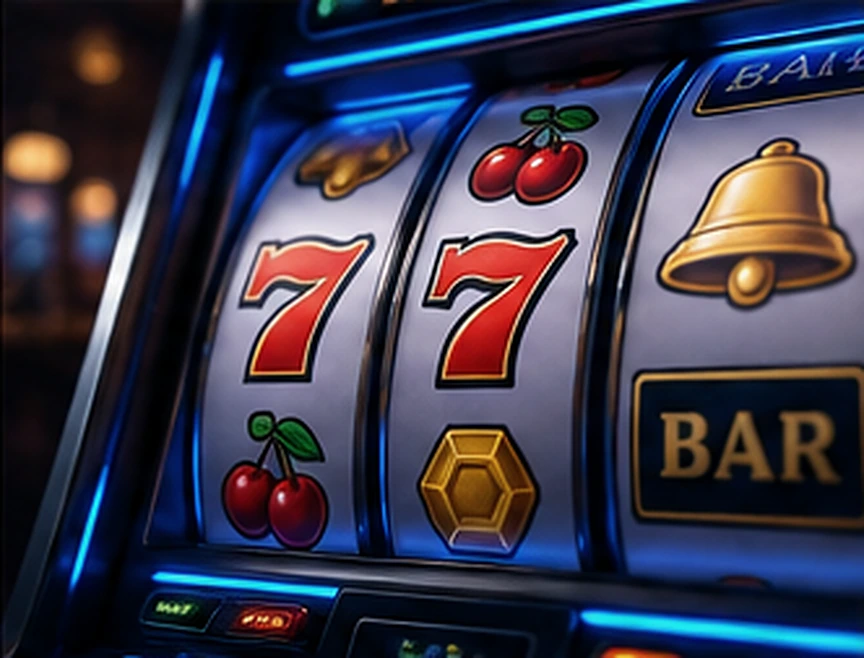
An online slot machine uses a random number generator (RNG), commonly implemented as a pseudo-random number generator (PRNG), to select an outcome according to the game's programmed probability distribution. The display then presents that outcome through reels, rows, slot symbols and animations. Its randomness matters more than the visual effect. On properly implemented RNG slots, spins are independent: a losing streak does not make a bonus or jackpot more likely on the next spin.
The paytable and game help screen explain winning combinations, paylines or ways to win, stake per spin and payout values. Classic slots typically use simpler reel layouts and standard symbols, while video slots may add wild symbols, scatter symbols, multipliers and feature rounds. Megaways slots vary the number of ways to win. Cascading reels can remove winning symbols and replace them; respins can provide another outcome within a feature. These mechanics affect how prizes are distributed, but no single feature guarantees a higher overall RTP.
Free spins, bonus symbols and bonus triggers can contribute a significant share of a game's theoretical return. Bonus trigger frequency is a different statistic from how much a feature typically pays. Where bonus buy or feature buy options are offered, they may use different odds, cost more than ordinary spins, or have a separately stated feature RTP. A prominently displayed max win, often expressed as a multiple of stake, describes a possible top payout rather than the chance of reaching it.
Progressive slots with a progressive jackpot add another complication. Part of the bet may contribute to a shared jackpot pool, and the displayed RTP may include a jackpot contribution that most players never personally receive. The base-game RTP, any feature RTP, and the progressive element should be distinguished when the game provides that breakdown. Jackpot size, contribution rules and qualifying bet limits can all matter; a bigger advertised prize is not evidence of a better return.
RTP vs volatility vs hit frequency: three different questions
| Measure | Meaning | What it cannot tell you |
|---|---|---|
| RTP | Long-run average share of stakes returned as prizes. | What you will recover during one session. |
| Volatility | How spread out the game outcomes are. | The exact time of the next large win. |
| Hit frequency / hit rate | How often a spin awards any prize under the game's definition. | Whether the prize exceeds the cost of that spin. |
| Bonus trigger frequency | How often a particular feature is expected to activate. | The value of the next bonus round. |
A low volatility slot generally distributes more of its return through smaller, more frequent prizes. High-volatility or extreme volatility slots tend to put more weight on rare, larger outcomes, which can create longer losing streaks. Medium volatility falls between these patterns. These labels are often studio-defined; there is no universal scale that makes a “medium” label identical across every provider.
Consider two slots with the same 96% theoretical RTP. One could award smaller wins frequently, while the other produces fewer wins punctuated by rare large payouts. Their long-run mathematical return is identical, but their short-session results and bankroll pressure may differ markedly. Even a high win frequency or hit rate can be misleading if many winning spins pay less than the stake.

What counts as a good slot RTP?
There is no universal legal or mathematical threshold that turns a slot into a “good” game. Players often use around 96% as a comparison benchmark, but that is a rule of thumb, not a guarantee, a New Zealand minimum requirement, or proof of fairness. A 97% configuration has a one-percentage-point lower theoretical house edge than a 96% configuration; both still favour the operator over time.
Use RTP to compare verified versions of otherwise similar games, then consider volatility, bet limits and the rules for special features. A slot is a poor fit if its available stake or risk profile exceeds what you can comfortably lose, regardless of how high its published RTP appears.
How to find the RTP of the exact slot you are viewing
- Open the game info panel. Look for an “i”, question-mark icon, paytable, help screen, or game rules menu before placing a bet.
- Find the specific theoretical RTP percentage. Do not substitute a search-result snippet, a generic slot review or the studio's highest available percentage.
- Check the game version and mode. The same title can be supplied in different RTP configurations. Check whether an optional feature buy, base game or jackpot mode has a separate return figure.
- Confirm conditions affecting payouts. Look for qualifying bets, maximum and minimum stakes, special-symbol rules and whether displayed free-spin payouts are included in the published percentage.
- Cross-check when necessary. A game specification sheet from the studio or independently documented testing can help, but it must match the actual version offered by the operator.
If the applicable percentage is unclear, do not assume that the highest number found online applies. The game title or a familiar studio logo is not enough. An advertised demo mode should not automatically be assumed to have identical odds to real-money mode; compare the rules and stated RTP. New Zealand's online casino technology minimum standards require disclosure when equivalent free and paid games have different odds or RTP, and require theoretical RTP to be easy to access under the regulated framework.
Why well-known slots can have different RTP versions

Studios such as NetEnt, Pragmatic Play, Play’n GO, Red Tiger and Games Global (associated with the Microgaming portfolio) supply different game designs and, where offered, operator-selectable configurations. Land-based machine specialists such as IGT and Aristocrat also help explain why familiar slot brands appear in different formats. The casino operator, game provider and local jurisdiction can influence game availability and which version is offered in a regulated market.
Names such as Starburst, Book of Dead, Gates of Olympus, Wolf Gold and Big Bass Bonanza are useful for recognising popular game styles, not for inferring a percentage. The same caution applies to Mega Joker, Rainbow Riches, Genie Jackpots and Blood Suckers. Any RTP figure attached to one of these titles should be checked against the live game's own information rather than copied from a review of another release or casino.
Can you trust a displayed RTP?
RTP describes a game's long-term returns. It does not tell you whether a casino will pay withdrawals promptly or handle complaints fairly. Testing organisations such as eCOGRA, Gaming Laboratories International (GLI) and iTech Labs may check games, but their logos do not prove that the version you are playing was checked or that the casino is licensed in New Zealand.
The UK Gambling Commission (UKGC) explains how RTP is measured over many games. Its guidance does not make a casino licensed in New Zealand. Check the casino's status, withdrawal rules, complaint process and player protections separately.
For New Zealand players, the Department of Internal Affairs (DIA) is the relevant source for the local market. As at October 2026, the Online Casino Gambling Act 2026 is in force, but the new licensing system is being introduced in stages and licences are expected from 2027. Under the transitional arrangements, existing providers are subject to restrictions; online casino advertising to New Zealand customers is currently prohibited. A public register of licensed operators is planned as the regime becomes operational. Check DIA's current status rather than assuming a foreign licence is a New Zealand approval.
Do bonuses, autoplay or betting more improve RTP?
A casino bonus, such as a welcome bonus, free spins promotion or cashback offer, does not normally rewrite the mathematical RTP of an underlying slot. The offer may change the financial terms of participation, often through a wagering requirement, eligibility restrictions, contribution percentages, caps or withdrawal conditions. For example, a bonus of NZ$20 with a 35× wagering requirement on the bonus amount alone calls for NZ$700 in qualifying stakes; that is turnover, not NZ$700 of guaranteed loss or winnings. Read the bonus terms, including which games contribute and whether any maximum bet applies.
Autoplay cannot make independent spins “due” to pay, although unattended repeat betting can increase the amount wagered before you notice. New Zealand’s technology minimum standards require a separate, deliberate action for each new game round, prohibit automatic starts and simultaneous slot play, and set a minimum 2.5-second interval between the start of a round and the next round becoming available on a regulated platform. Raising the stake, changing paylines or using a different bet size does not provide a method for defeating the house edge. If a game's rules tie eligibility or RTP to a particular stake, verify those conditions directly; otherwise, larger bets simply expose more money to the same percentage disadvantage.
Does RTP work the same way in other casino games?
The concept extends beyond slots, but the calculation is not always a simple fixed game label. In European roulette a single zero produces a different house edge from double-zero American roulette; some French roulette rules affect even-money bets. Blackjack returns depend on table rules and basic strategy, while paytables and decisions matter in video poker. Baccarat bets have different margins, and keno payout structures vary by game. Comparisons with a land-based casino also require checking that the games and RTP disclosures are genuinely comparable. These differences are reasons to compare rules, not reasons to expect a guaranteed win.
Common RTP myths that cost players money
- “The machine is due after a losing streak.” Independent RNG spins have no memory of previous losses. Expecting a reversal is the gambler’s fallacy.
- “Hot or cold slots can be spotted from recent wins.” A run of payouts or dry spins does not reveal the next random outcome.
- “96% RTP means a 96% chance of winning.” RTP measures average money returned, not winning odds, hit frequency or the probability of ending a session ahead.
- “A high RTP makes long sessions profitable.” Expected loss generally grows with total stakes when the house edge is positive. Continuing to play does not erase past losses.
- “A huge max win means high RTP.” A rare top prize can coexist with low hit frequency and high volatility.
Setting limits matters more than predicting the next spin
For anyone who chooses to gamble, a bankroll should be money they can afford to lose, not income they need to recover. Decide on a loss limit and a time limit before play, select bet sizing that fits those limits, and stop when either limit is reached. Chasing losses or using borrowed money increases financial risk. An RTP figure cannot make gambling a reliable way to earn money.
New Zealand's online casino framework sets an 18+ age restriction for gambling on licensed platforms, alongside harm-minimisation and consumer-protection requirements. If gambling is causing stress, financial pressure or difficulty stopping, seek responsible gambling support locally. Older UK resources may mention GambleAware, a charity that ceased operating in March 2026. In New Zealand, gambling harms support is available through Gambling Helpline New Zealand on via gamblinghelpline.co.nz or by text on 8006. Support is available regardless of whether someone has a gambling account.
Slots & RTP: questions worth checking
Does RTP reset every day or after a jackpot?
No. The theoretical RTP is a property of the game configuration, not a pot that fills up, empties or resets on a schedule. Actual RTP calculated from a particular reporting period changes as results accumulate.
Can a slot have 99% RTP and still lose my entire deposit?
Yes. Even a very high theoretical RTP is an average across many wagers. It says nothing reliable about a single deposit or the next sequence of spins.
Can the casino change a slot's RTP without changing its name?
Different approved configurations may exist for the same title, and an operator's offering can change. What matters is the percentage disclosed for the exact game version being played. Do not assume that a remembered percentage remains current.
Does getting a small win mean a spin was profitable?
Not necessarily. A NZ$0.40 prize on a NZ$1 spin may count towards hit frequency, but the net result is a NZ$0.60 loss for that spin.
What if a slot does not display its RTP?
Check the help screen and rules first. If the applicable RTP still cannot be found or verified, treat that as missing decision-critical information rather than guessing from the game's artwork, studio or online ranking.